How to Remove Dishwasher Etching From Glasses
Quick Answer: True dishwasher etching cannot be removed. Libbey says there is no practical method to restore etched glass. What looks like etching is often film, which vinegar removes, so rub a little vinegar on the haze first. To slow further damage, use minimal detergent, do not overload the machine, use a rinse aid, and open the door when the cycle ends.
Two different things make glasses look frosted after the dishwasher: a removable film and permanent damage to the glass surface. This post tells them apart, explains what causes each, and lists what makers say to change. The removable case is covered in full in how to clean cloudy drinking glasses, and the dishwasher settings are in wine glasses in the dishwasher.
Can you remove dishwasher etching from glasses?
No. Libbey describes etching as a permanent eroding or pitting of the glass surface, where metal ions have been removed and silica is exposed, and says there is no practical method to restore its luster. Corning Museum of Glass conservators say cloudiness that is surface deterioration cannot be fixed. Whirlpool says etching is irreversible and may mean replacing the glass. A cloth, a cleaner or a soak will not undo it.
How do you tell etching from film?
Rub a little vinegar on the haze. Whirlpool says film comes off and etching does not, though a film that does not come off may also be a silica film.
| Sign | Film | Etching |
|---|---|---|
| Vinegar rub | Haze lifts | Haze stays |
| Appearance (Whirlpool) | A cloudy or hazy layer | Permanent dullness or roughness |
| Held at an angle to the light (Libbey) | No color shades described | Shades of blue, purple, pink and brown |
| Fixable | Yes | No |
What causes etching and film in a dishwasher?
Water and detergent, mostly, and the makers do not fully agree on which matters most.
| Source | Cause it names |
|---|---|
| Libbey | Natural soft water or softened hard water, and food left on the glass. It names hard water as the cause of film |
| Waterford | Dishwasher heat, friction and detergent, which can dull or scratch the surface |
| Whirlpool | Hard-water residue, the wrong amount or type of detergent, and a water and chemical reaction with certain glassware |
| Val Saint Lambert | Limescale levels, water temperature, and how abrasive the detergent is |
Whirlpool also says glasses should not touch other items in the machine, to prevent scratches. Scratches from glasses knocking together are a separate cause from chemical etching.
How do you stop dishwasher etching?
Work through the list the makers give. Libbey says to use less than a tablespoon of detergent, under-load the dishwasher for maximum rinsing, use a rinse aid, and use the correct water temperature of 140 to 150 F (60 to 66 C) for its everyday glassware. Val Saint Lambert says to use the fragile setting at a moderate temperature and a liquid or gel detergent, and to open the door after the cycle so steam escapes. Whirlpool says top rack, glasses not touching, phosphate-free detergent and a rinse aid.
The temperature advice conflicts, so follow the maker of your own glass. If you cannot find one, the lower, gentler setting is the safer start. That is a judgment, not a maker rule.
Where does a cloth fit?
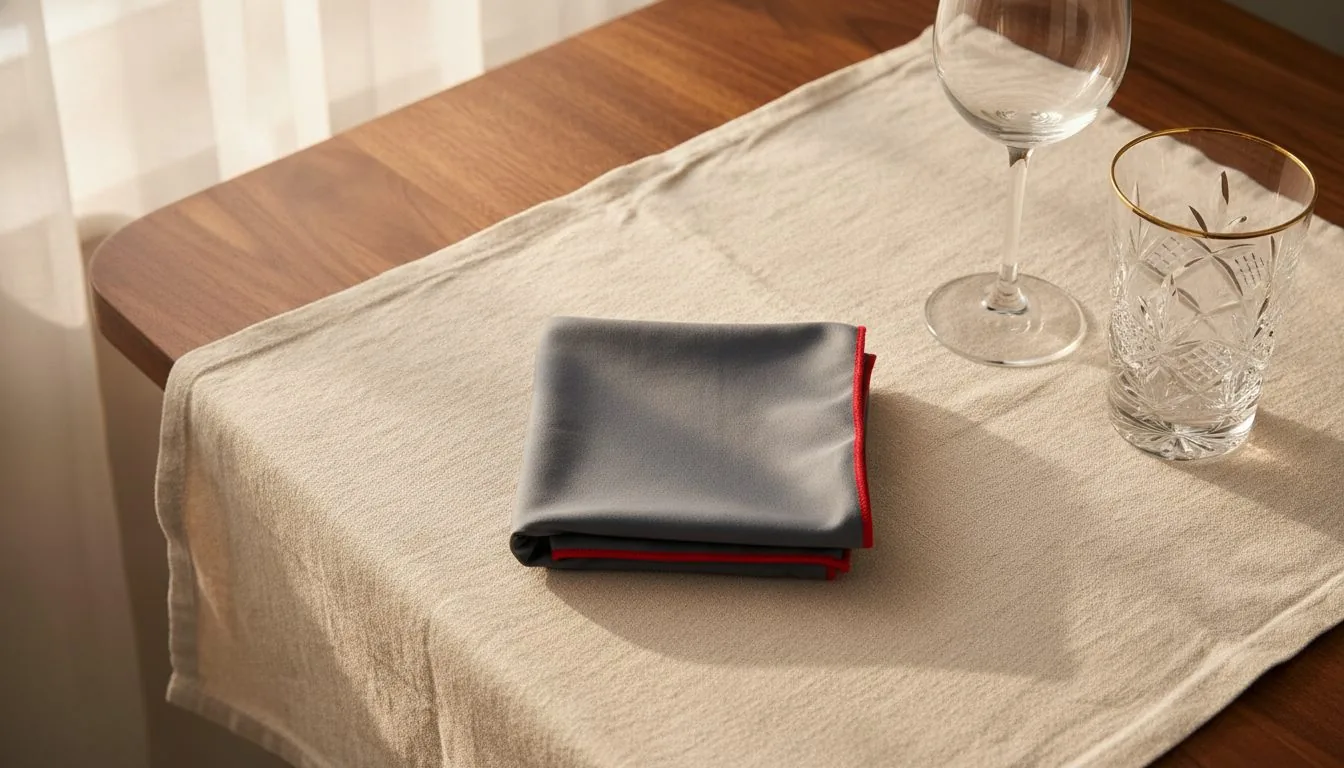
After the cycle. Libbey says to consider hand-drying right after a dishwasher cycle so water does not dry on the surface. The Excalibur Brothers Premium Glass Polishing Cloth is our own product, sold on this site. The Premium Glass Polishing Cloth in gray is a large microfiber cloth sold as a pack of two.
When this is not the right choice: a cloth cannot reverse etching and does not remove film. If the haze is permanent, nothing you buy will fix it. More care guides are in The Codex, and general care is in Caring for Fine Glassware.
Frequently asked questions
Why do I have dishwasher stains on my glasses?
Usually hard-water film or detergent residue, which can be removed, or etching, which cannot. The vinegar rub test shows which.
What causes stains on glasses from the dishwasher?
Whirlpool names hard water, the wrong amount or type of detergent, and a reaction with certain glassware. Libbey names soft water and food left on the glass for etching.
Does the dishwasher scratch glasses?
It can if glasses touch each other or metal. Whirlpool says glasses should not touch other items, to prevent scratches, and Waterford says dishwasher friction can scratch the surface.
Is the dishwasher ruining my glasses?
It can. Val Saint Lambert says a dishwasher can damage glassware and leave a cloudy film. A Corning Museum of Glass conservator, on a page about Pyrex, says he generally recommends never putting any glass through a dishwasher. Libbey and Val Saint Lambert give settings for those who do.
How do you stop glasses going cloudy in the dishwasher?
Use minimal detergent, do not overload, use a rinse aid, and open the door when the cycle ends. Makers differ on temperature.
Does rinse aid prevent etching?
Libbey lists a rinse agent among ways to prevent or slow etching, and Whirlpool recommends one designed for glassware. Neither says it prevents etching completely.