How to Clean Cloudy Drinking Glasses at Home
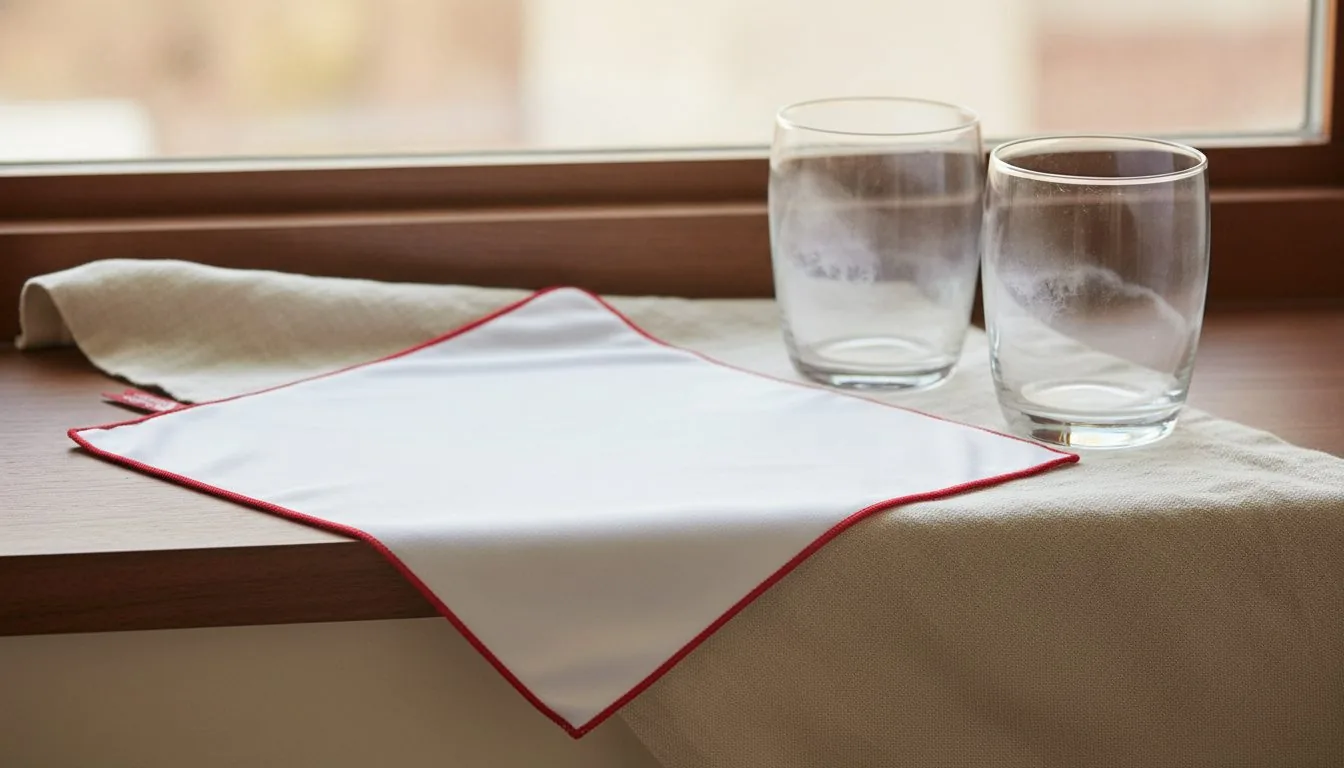
Quick Answer: Cloudy glasses are usually hard-water film or detergent residue, which white vinegar can lift, or etching, which is permanent. Rub a little vinegar on the haze. If it wipes off, it was film. If it stays, it may be etching, and no cleaner will bring the surface back. Rinse well and dry promptly so it does not return.
This post covers everyday tumblers and wine glasses that have gone dull. It gives the test that separates fixable film from permanent etching, the vinegar method, and what to change so the haze does not return. The basic wash routine is in how to clean wine glasses, and general care is in Caring for Fine Glassware.
Why do drinking glasses go cloudy?
Three causes account for most of it. The first is hard water. The US Geological Survey says hard water is one of the most common causes of cloudy dishes and glassware, and it defines hardness as dissolved calcium and magnesium. The second is detergent: Whirlpool says the wrong amount or type of detergent can leave a film, and that phosphate limits in dishwasher detergents since 2010 may cause a white film. The third is etching, where the glass surface itself is damaged.
The USGS classes water above 180 mg/L as very hard. Its figures are national, so ask your local water utility for your own.
How can you tell film from etching?
Rub a small amount of vinegar onto the haze. Whirlpool's test is that film comes off and etching does not. Libbey adds a visual check: hold the glass at an angle to the light, and etched glass shows shades of blue, purple, pink and brown.
| What you see | Likely cause | Can it be fixed? |
|---|---|---|
| White or hazy layer that wipes off with vinegar | Hard-water minerals or detergent residue | Yes |
| Dull or rough patches that stay after vinegar, often with colored shades at an angle | Etching (Whirlpool says it could also be a silica film) | No, according to Libbey: no practical method restores it |
How do you clean cloudy glasses with vinegar?
Use white vinegar on its own. Libbey says to soak the glasses in vinegar to release the minerals, gently scrub with a nylon net or plastic scrubber, rinse, and dry with a lint-free towel. Val Saint Lambert says vinegar can be used neat or diluted with a little water, and warns against rough or metallic sponges. None of these pages gives a ratio or a soak time, so check the glass as you go.
Do not mix vinegar with other cleaners. Poison Control notes that mixing bleach with an acid, and vinegar is one, makes chlorine gas.
What if the haze does not come off?
Then it is probably etching, and it is permanent. Libbey says there is no practical method to restore the luster, and Corning Museum of Glass conservators say cloudiness that is surface deterioration cannot be fixed. Whirlpool says the glassware may need replacing. What is left is prevention for the glasses that are still clear: Libbey says to use minimal detergent, under-load the dishwasher, and use a rinse aid. Libbey also says natural soft water or softened hard water is most often to blame for etching.
How do you stop glasses going cloudy again?
Rinse until no detergent is left, and dry the glass before minerals can settle. Libbey suggests hand-drying straight after a dishwasher cycle so water does not dry on the surface. Whirlpool says glasses go on the top rack, not touching, with a rinse aid. A lint-free cloth handles the drying, and The Secret to Streak-Free Crystal covers why streaks form.
The Excalibur Brothers Premium Glass Polishing Cloth is our own product, sold on this site, in white, gray or an assorted pair. The Premium Glass Polishing Cloth in white is a large microfiber cloth, sold as a pair.
When this is not the right choice: a cloth only dries and polishes. It will not remove film, and it cannot repair etching. If the haze wipes off with vinegar, the vinegar did the work, and any clean lint-free towel will do for drying.
Frequently asked questions
How do you clean cloudy wine glasses?
Run the same vinegar test. If the haze lifts, clean the bowl gently and rinse well, holding the bowl and not twisting it against the base. If your glass is crystal, check the maker's instructions first.
Does vinegar damage glass?
Libbey and Val Saint Lambert name vinegar for film, and Whirlpool uses it as its test. No page cited says how long a glass can sit in it, so check often.
Why did my glasses go cloudy in the dishwasher?
Hard water, too much or the wrong detergent, or etching, which Libbey links to soft water and food left on the glass. Whirlpool says test with vinegar to tell film from etching.
How do I know if my water is hard?
Ask your local water utility. The USGS says its national hardness data is not designed for decisions at the scale of a single home.
Why do hand-washed glasses look filmy?
Often detergent that was not rinsed off. Waterford says to rinse glasses thoroughly after washing, and Whirlpool says the wrong amount of detergent can leave a film.
Does a distilled water rinse help cloudy glasses?
It helps prevent spots. The Corning Museum of Glass conservators suggest washing with a mild detergent and rinsing well with deionized or distilled water, which has no minerals and so leaves no water spots. They say surface deterioration cannot be fixed.