How to Clean Wine Glasses: A Step-by-Step Guide
Quick Answer: Wash wine glasses by hand soon after use, in warm soapy water with a small amount of mild detergent, and rinse until no soap is left. Dry and polish with a clean, lint-free cloth, holding the bowl and never twisting it against the stem. Skip hot water. Cloudy or spotted glass is a separate problem, and a cloth will not fix it.
This is the whole hand-washing routine in order: what to wash with, how to hold the glass, how to dry it, and where glass and crystal makers disagree. Storage rules are in Caring for Fine Glassware, and the causes of streaks are in The Secret to Streak-Free Crystal.
What should you wash a wine glass with?
Warm soapy water, a small amount of mild detergent and a soft sponge. Waterford says crystal and glass should be hand washed separately in warm soapy water, rinsed thoroughly and dried with a lint-free cloth. Crystal maker Val Saint Lambert says lukewarm water at a consistent temperature, and warns against rough or metallic sponges. Crystal maker Rückl says to use only a small amount of mild detergent.
Temperature matters for a second reason. Waterford warns that extreme temperatures can crack glass, and says to avoid pouring hot liquids into cold glass or very cold liquids into warm glass. Rückl says the same about sudden changes in deeply cut crystal. The same logic argues against a cold glass in hot water.
How do you hold a wine glass while washing it?
By the bowl, one glass at a time, with room around it. Waterford says not to twist the bowl in the opposite direction to the stem when washing or drying, because that can cause damage. Rückl says the thin upper rim of its glasses is the most fragile part and to leave space between pieces when washing or storing them. Rinse the glass soon after use, before wine dries on it. Stop using a glass that is chipped or cracked.
Should you dry wine glasses by hand or let them air dry?
Makers differ. Hard water is one of the most common causes of cloudy glassware, according to the US Geological Survey, and water that dries on the glass leaves its minerals behind.
| Source | What it says about drying |
|---|---|
| Waterford | Dry with a lint-free cloth. Do not turn glasses upside down while drying or storing, because the rims are the most fragile part |
| Libbey (everyday glassware) | A lint-free towel that leaves no fibers behind. Hand-dry promptly so water does not dry on the surface |
| Val Saint Lambert | A soft, non-fluffy cloth |
| Rückl | Wipe gently with a clean cloth so water does not settle |
| Corning Museum of Glass conservators | After a rinse in distilled or deionized water, air drying or towel drying are both fine. The minerals are gone, so no water spots form |
In short, hand-drying with a lint-free cloth is the common advice, and air drying works if the last rinse is mineral-free.
Where does a polishing cloth fit in?
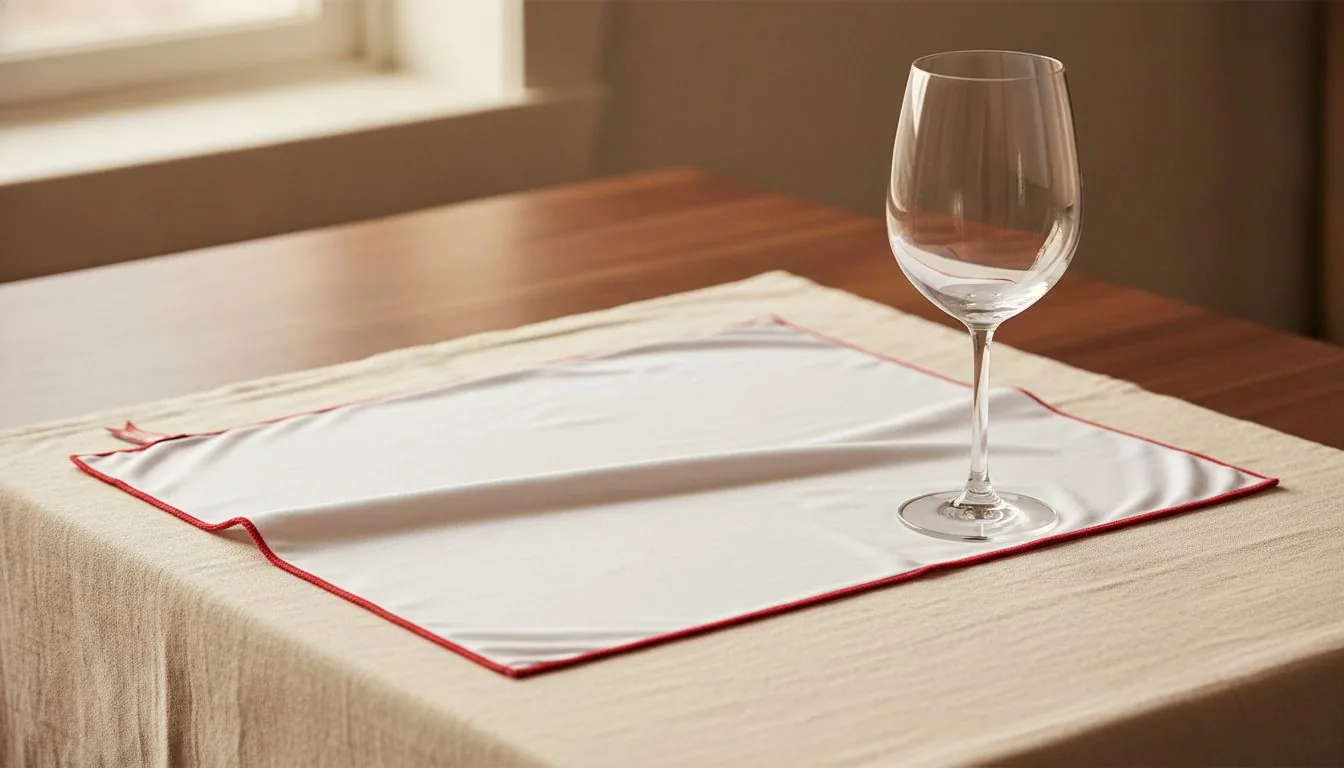
It is the last step, after the glass is washed and rinsed. Hold the glass with one cloth under the bowl and use a second to polish the inside and outside, then the base, holding the bowl or the base and never twisting one against the other. The Excalibur Brothers Premium Glass Polishing Cloth is our own product, sold on this site. It is a large microfiber cloth, listed at 23.5 x 20 inches and sold as a pack of two, in white, gray or an assorted pair. The product page for the Premium Glass Polishing Cloth in white says to use it dry or barely dampened.
When this is not the right choice: a cloth finishes a clean glass. It does not remove hard-water film and it does not repair etching. If you already own large, clean, lint-free cloths, you do not need another set.
Frequently asked questions
How do you wash wine glasses by hand?
Rinse soon after use. Wash one glass at a time in warm water with a small amount of mild detergent and a soft sponge, holding the bowl. Rinse with clear water until no detergent is left, then dry and polish with clean lint-free cloths.
Can you use dish soap on wine glasses?
Yes, a small amount, rinsed thoroughly. Waterford says to wash in warm soapy water and rinse thoroughly, and Rückl says to use only a small amount of mild detergent.
Is hot water bad for wine glasses?
For stemware, stay warm. Waterford says warm soapy water and warns about extreme temperatures, and Val Saint Lambert says lukewarm. Libbey's care page for everyday glassware mentions rinsing in hot water after a vinegar scrub, so makers do not fully agree for tumblers.
Can you put wine glasses in the dishwasher?
Makers split. Waterford says dishwasher heat, friction and detergent can dull or scratch crystal, and Val Saint Lambert would not advise it. Libbey gives dishwasher settings for its everyday glassware. Follow the instructions for your own glass.
Should you dry wine glasses with a tea towel?
Only a clean one that leaves no lint. Waterford and Libbey ask for a lint-free cloth and Val Saint Lambert for a soft, non-fluffy one, so a towel that sheds fibers fails all three.
Why do wine glasses look cloudy after washing?
Usually hard-water film or detergent residue, which can be removed, or etching, which cannot. Whirlpool says to rub gently with a little vinegar: if the haze stays, it may be etching or a silica film.