How to Clean a Crystal Decanter (and Remove Cloudiness)
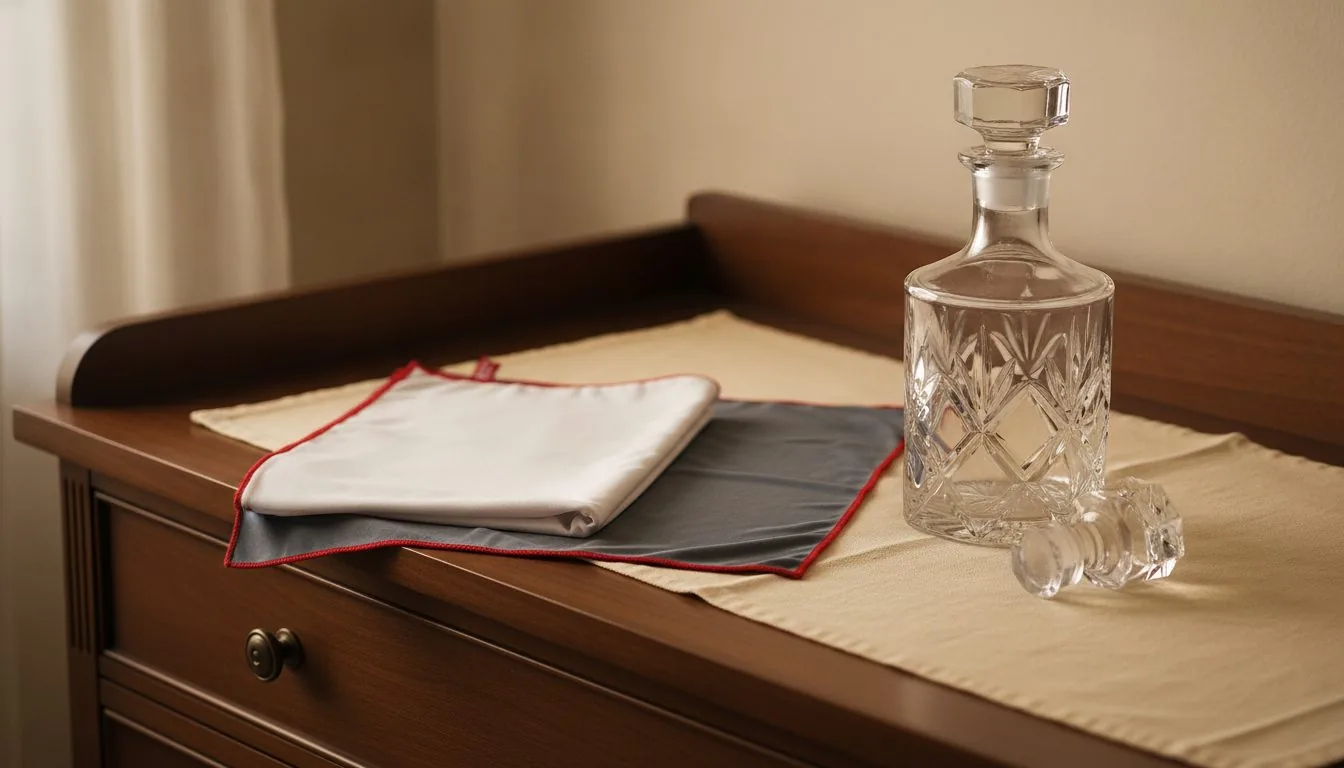
Quick Answer: Wash a crystal decanter by hand with warm soapy water, rinse thoroughly and dry it. For limescale cloudiness, Val Saint Lambert names white vinegar, neat or diluted with a little water. Waterford uses a 50/50 vinegar and water solution, left overnight, to prepare a new decanter. Etching is permanent, and the EPA advises against storing liquids in lead crystal.
A decanter is hard to clean because you cannot reach the inside, so the method is soaking and rinsing, not scrubbing. This post follows what crystal makers and a glass museum say, and is upfront about what they do not cover. The basic hand-washing routine for glasses is in how to clean wine glasses, and general care is in Caring for Fine Glassware.
How do you clean a crystal decanter?
Steps, in order:
- Empty the decanter and rinse it with warm water soon after use.
- Wash the inside with warm soapy water, as Waterford says for decanters and carafes.
- Rinse thoroughly. The Corning Museum of Glass conservators suggest a mild detergent and a final rinse with deionized or distilled water, which has no minerals and so leaves no water spots.
- Leave it to dry. The conservators say glass can be air dried or towel dried, and stored so that air can move around it, because trapped moisture can cause further deterioration.
No cited maker gives a drying orientation for decanters, so leave it somewhere stable. Waterford says not to turn crystal upside down while drying or storing, because the finely made rims are the most fragile part.
Can you use soap or a dishwasher on a decanter?
Soap yes, dishwasher no. Waterford says to wash the inside of a decanter with warm soapy water and rinse, and the Corning conservators suggest a mild detergent. On dishwashers, Waterford says heat, friction and detergent can dull or scratch crystal, and crystal maker Val Saint Lambert says it would not advise one for its glasses. The cleaners that do work are in wine glass cleaner: what works and what to skip.
How do you remove cloudiness and stains from a decanter?
It depends on the cause.
| Problem | What the makers name | Limit |
|---|---|---|
| Cloudy film from limescale | White vinegar, neat or diluted with a little water (Val Saint Lambert) | No cited page gives a soak time for crystal |
| A new or long-unused decanter | A 50/50 vinegar and water solution left overnight, then a wash and rinse (Waterford) | Waterford gives this as a first-use step for decanters and carafes |
| Water spots after rinsing | A final rinse with distilled or deionized water (Corning conservators) | Prevents spots. It does not remove existing damage |
| Cloudiness that stays | Nothing. The Corning conservators say surface deterioration cannot be fixed | Val Saint Lambert says persistent clouding may need a professional |
The test that separates film from etching is in how to clean cloudy drinking glasses.
What should you avoid with a crystal decanter?
Rough or metallic sponges (Val Saint Lambert) and extreme temperatures. Waterford warns that extreme temperatures can crack crystal and says to avoid pouring hot liquids into cold crystal or very cold liquids into warm crystal. Do not use bleach, and do not mix cleaners.
Waterford also says to avoid storing food or beverages in glass containers for extended periods and to change the contents frequently, which helps avoid film build-up and chemical erosion of the interior surface. Lead is a separate question. The US EPA says to avoid storing or serving food and liquids in lead crystal, and that it is worse if the piece is chipped or cracked. Cleaning does not change that. Only the maker can say whether a decanter contains lead.
Where does a polishing cloth fit?
On the outside, after the decanter is dry. The Excalibur Brothers Premium Glass Polishing Cloth is our own product, sold on this site. The Premium Glass Polishing Cloth in an assorted pair is a large microfiber cloth, sold as a pack of two. The collection also has white and gray.
When this is not the right choice: a cloth will not reach or clean the inside of a decanter and will not remove limescale or etching. If you already have a clean, lint-free cloth for the outside, you do not need another.
Frequently asked questions
How do you clean a crystal decanter with vinegar?
Val Saint Lambert says white vinegar neat or diluted with a little water for limescale. Waterford uses a 50/50 vinegar and water solution left overnight for a new decanter, then a wash and rinse. No cited page gives a soak time for removing cloudiness.
How do you clean a cloudy crystal decanter?
If the cloudiness is limescale, vinegar can remove it. If it is surface deterioration, the Corning conservators say it cannot be fixed. Val Saint Lambert suggests a professional for persistent clouding.
Can you put a crystal decanter in the dishwasher?
Waterford says dishwasher heat, friction and detergent can dull or scratch crystal, and Val Saint Lambert would not advise a dishwasher for its glasses. Check the maker's instructions.
How should you dry a decanter?
The Corning conservators say glass can be air dried or towel dried, and stored with air movement. No cited maker gives an orientation for a decanter.
How often should you clean a decanter?
Waterford says to change the contents of glass containers frequently, which helps avoid film build-up and erosion of the interior surface. Wash and rinse after each use.
Is it safe to store drinks in a crystal decanter?
Not if it is lead crystal. The US EPA says to avoid storing or serving food and liquids in lead crystal. Only the maker can say whether a piece contains lead.