How to Clean Drinking Glasses So They Stay Clear
Quick Answer: Wash drinking glasses inside and out with detergent and water, rinse well, then air-dry or dry with a clean towel. Wash glasses first, while the water is cleanest. Sanitizing is a separate step: Washington State University Extension gives a rinse of 1 tablespoon of chlorine bleach per gallon of cool water for everyday dishes. Never mix bleach with other cleaners.
This post is about everyday tumblers, pint glasses and whiskey glasses, not fine stemware. It covers washing, keeping a full cupboard clear, sanitizing at home, and secondhand glassware. Fine stemware has its own routine in how to clean wine glasses, and general care is in Caring for Fine Glassware.
How do you wash everyday drinking glasses?
Wash each glass on both sides with detergent and water, inside and out, and do glasses before anything greasy. That is the order in Washington State University Extension's dishwashing guide (EM4808E), which lists glasses first so the water stays clean longer. Then rinse, and either air-dry or dry with a clean towel.
Water temperature depends on the glass. WSU is about everyday dishes and calls for water as hot as your hands can take. Glassmakers are more cautious with stemware.
| Glass | Water | Source |
|---|---|---|
| Everyday dishes and tumblers | Hot wash and rinse | WSU Extension. Libbey also mentions a hot rinse after a vinegar scrub |
| Fine stemware and crystal | Warm soapy water. Extreme temperatures can crack glass | Waterford |
| Crystal | Lukewarm, kept consistent | Val Saint Lambert |
If a glass is thin, decorated or valued, use warm water. No pint or beer glass advice from a maker or agency is cited here, so the same steps apply.
How do you keep glasses clear?
Rinse away every trace of detergent and do not let water dry on the glass. Waterford says to rinse thoroughly after washing. Libbey says hard water leaves calcium and magnesium behind as it dries, and that hand-drying right after a dishwasher cycle prevents it. Do not crowd a dishwasher: Libbey says to under-load it to allow maximum rinsing. When storing, Rückl says to leave space between pieces. If glasses are already dull, a vinegar test separates film from etching. If they go in the machine, see wine glasses in the dishwasher for where makers disagree.
How do you sanitize drinking glasses at home?
WSU Extension's sanitizing rinse for everyday dishes is 1 tablespoon of chlorine bleach per gallon of cool water, so follow the label on your bleach and keep it away from crystal.
Never mix bleach with another cleaner. Poison Control says mixing bleach with an acid, such as vinegar, makes chlorine gas. A polishing cloth is not a sanitizer, and it does not disinfect anything.
Is secondhand or thrift-store glassware safe to use?
Wash it before first use, and be careful with anything that could contain lead. Rückl's first-use advice is to remove label adhesive, then rinse by hand in warm water with a little mild detergent. The US EPA says adults and children can ingest lead from dishes or glassware that contain it, and to avoid storing or serving food and liquids in lead crystal, especially if chipped or cracked. It also notes that the Consumer Product Safety Commission does not recommend home lead test kits for consumer products. A wash cannot tell you what a glass is made of, so stop using any that is chipped or cracked.
Where does a cloth fit?
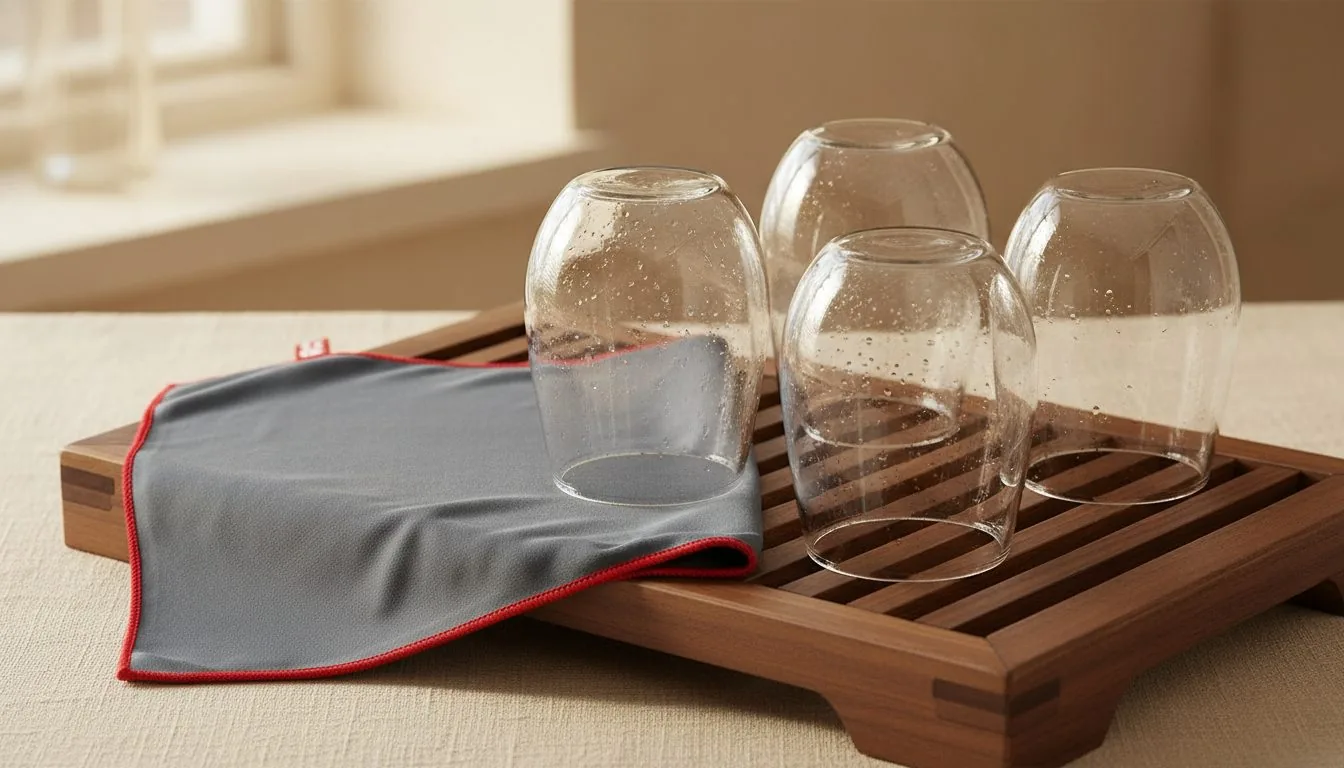
After the wash and rinse, to dry and polish. The Excalibur Brothers Premium Glass Polishing Cloth is our own product, sold on this site. It is a large microfiber cloth in a pack of two, and the Premium Glass Polishing Cloth in gray is one of three options in the collection.
When this is not the right choice: everyday tumblers do well air-drying or with any clean towel, per WSU and Libbey. A cloth will not remove film or etching, and it does not sanitize.
Frequently asked questions
How do you hand wash drinking glasses?
Wash inside and out with detergent, glasses first, then rinse thoroughly and dry with a clean towel or let them air-dry.
How do you disinfect drinking glasses?
WSU Extension names a rinse of 1 tablespoon of chlorine bleach per gallon of cool water for everyday dishes. Never mix it with vinegar or other cleaners, and keep it away from crystal.
How do you clean pint glasses and beer glasses?
The same way: wash inside and out, rinse until no detergent is left, and dry. No maker or agency cited here gives separate steps for beer glasses.
Why do my drinking glasses look cloudy?
Hard-water film, detergent residue or etching. A gentle vinegar rub shows which, and the test is in the post on cloudy drinking glasses linked above.
Should you dry drinking glasses or let them air-dry?
WSU says either is fine for everyday dishes. Libbey and Rückl favor hand-drying to keep water from drying on the surface, and Waterford says not to turn glasses upside down while drying or storing, because the rims are the most fragile part.
Can you use old glasses from a thrift store?
Wash them first and check for chips and cracks. The EPA advises against storing or serving food and liquids in lead crystal, and a wash will not tell you whether a piece contains lead.