Mirror and Glass Cloth: What a Microfiber Cloth Is For
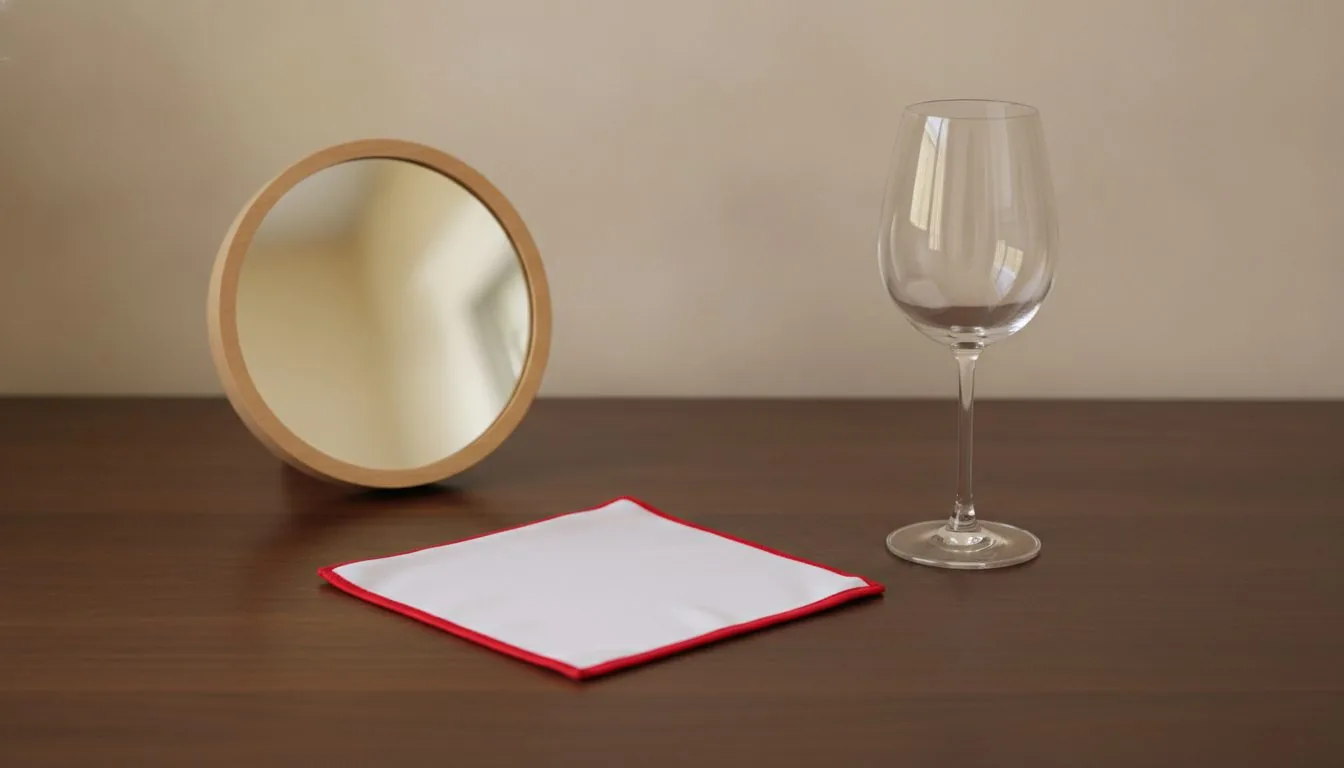
Quick Answer: The product page for the Excalibur Brothers polishing cloth lists stemware, a wine glass, glass doors, windows and kitchen appliances. It does not name mirrors, so this post does not call it a mirror cloth. A mirror maker's care sheet asks for soft, clean, lint-free cloths, no cleaner sprayed straight onto the glass, and liquid kept off the edges. Check any cloth against those points before you use it on a mirror.
Searches for a microfiber cloth for mirrors, windows and glass mix several jobs. This guide says plainly what the cloth's product page says it is for, then lays out what a mirror maker and a university extension publication say about cleaning a mirror, so you can judge any cloth yourself. For the glassware use the cloth is built around, see how to polish wine glasses.
What does the cloth's product page say it is for?
Stemware and fine glass, first. The page for the Premium Glass Polishing Cloth (read October 2026) gives these details, and the table repeats them without adding to them.
| Item | What the page says |
|---|---|
| Material | Microfiber |
| Size | 23.5 x 20 inches per cloth, sold as a pair |
| Best for | Stemware, crystal, decanters, fine glass |
| Use | Dry or barely dampened, no solution needed |
| Description | To polish stemware, a wine glass, glass doors, windows, kitchen appliances and many others; lint-free and smooth to the touch |
That is the full list of uses the page states. The word mirror does not appear in it.
Is the cloth made for mirrors?
The page does not say so, and this guide does not claim it. The page names glass doors and windows, not mirrors. If you decide to use any cloth on a mirror, the decision and the risk are yours. What this post can do is show what mirror makers ask of a cloth, so you can compare.
How do mirror makers say to clean a mirror?
With a soft, clean cloth and as little liquid as possible, kept away from the edges. A mirror manufacturer's care sheet, from American Specialties (Mirrors: Proper Care and Maintenance, checked October 2026), says the safest cleaner is clean, warm water with a soft cloth, and warns against heavy soaking. It says not to use acid, alkali, abrasive or concentrated ammonia-based cleaners, and never to spray any cleaner directly onto a mirror. Apply it to a soft cloth instead, because spray can puddle at the edge, where it could attack the backing or the silvering. It asks for clean, soft, grit-free cloths, and a cleaner-moistened lint-free cloth for dirt, then another to wipe off and polish dry.
A University of Florida extension publication (a guide to cleaning glass, windows and mirrors, revised 2005 and marked archival, checked October 2026) agrees on the main point. It says to wipe a mirror with a soft cloth damp with a vinegar and water mixture, not to let water collect on the frame and seep to the back of the mirror, and to dry with a soft, dry cloth that has no lint.
What should you look for in a cloth for mirrors?
The table lines up each point from the two sources next to what the cloth's page says. It is a comparison, not a claim that the cloth suits mirrors.
| What the mirror sources ask for | Source | What the cloth page says |
|---|---|---|
| Soft, clean, grit-free cloth | American Specialties | Smooth to the touch; silent on grit, so keep it clean |
| Lint-free cloth | American Specialties; University of Florida | Lint-free |
| One cloth for cleaning, another for drying | American Specialties | Sold as a pair |
| No spray directly on the glass | American Specialties | Dry or barely dampened, no solution needed |
| Keep liquid off the edges and frame | American Specialties; University of Florida | Silent |
The sources and the page do not fully agree. American Specialties calls warm water on a soft cloth the safest cleaner and allows an approved glass cleaner. The cloth page says no solution is needed. A barely damp cloth puts little liquid near an edge, but neither source says whether that is enough for a dirty mirror.
What does a polishing cloth not do?
It does not clean heavy dirt for you, it does not disinfect, and it does not repair a damaged mirror. A cloth polishes. The mirror sheet warns that humidity, fumes and cleaners that reach the backing can spoil the silvering, and no cloth reverses that. If a mirror has dark patches spreading from the edge, that is a job for the mirror's maker or supplier, not a cloth. Keep the cloth clean, because a gritty cloth is the opposite of what the mirror sources ask for; how to wash microfiber cloths covers washing.
Where the Excalibur Brothers cloth fits
The Excalibur Brothers Premium Glass Polishing Cloth is our own product, sold on this site. The Premium Glass Polishing Cloth in white is a large microfiber cloth, sold as a pack of two. Its page describes it for stemware, wine glasses, glass doors, windows and kitchen appliances. For the care routine behind it, see caring for fine glassware.
When this is not the right choice: if you want a cloth the seller states is for mirrors, this page does not say that, so check another listing or ask its seller. It is also not the right choice for cleaning heavy grime, sanitizing, or fixing a mirror whose backing has started to fail.
Frequently asked questions
What is the best cloth for cleaning mirrors?
The mirror manufacturer American Specialties asks for clean, soft, grit-free, lint-free cloths, one to clean and another to wipe off and polish dry. It does not name a cloth type.
Can you use a microfiber cloth on a mirror?
The product page for the Excalibur Brothers cloth does not name mirrors, so this post does not say it is for them. Compare any cloth with the mirror sources' points: soft, clean, grit-free and lint-free.
Should you spray glass cleaner directly on a mirror?
American Specialties says never to spray any cleaner directly onto a mirror and to apply it to a soft cloth instead, because puddling at the edge could attack the backing or the silvering.
Can you use a microfiber cloth for window cleaning?
The cloth's product page lists windows and glass doors among its uses. It says to use the cloth dry or barely dampened, with no solution needed.
How do you dry a mirror without leaving lint?
A University of Florida extension publication says to dry with a soft, dry cloth that has no lint, and not to let water collect on the frame.
What is a glass cleaning cloth?
A cloth used to wipe or polish glass. The cloth's product page describes a lint-free microfiber cloth for stemware, a wine glass, glass doors, windows and kitchen appliances.