Store Wine Glasses Upside Down or Upright? What Experts Say
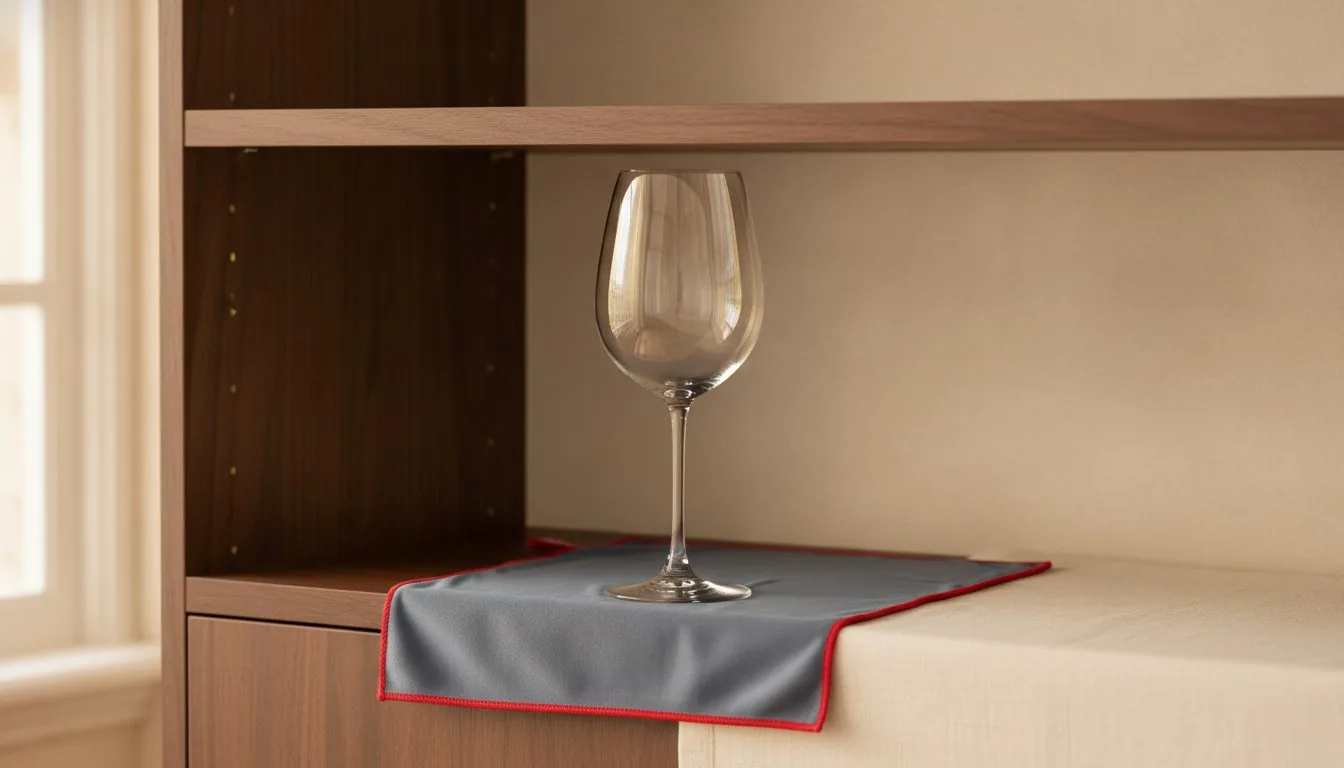
Quick Answer: Experts split on this. Waterford says not to turn crystal upside down while drying or storing, because the rim is the most fragile part. One hotel sommelier says upside down is always better, to keep dust out. No maker page cited here says upside down is fine for everyday glasses. For crystal, store it rim up, spaced apart, in a closed cabinet.
If a cabinet full of stemware came with a rule you half remember, this is the sorted version: who says what, why they disagree, and a decision rule you can use. Storage comes after washing and drying, so start with how to clean wine glasses and the drying section of how to put wine glasses in the dishwasher safely. The general care basics are in Caring for Fine Glassware.
Should you store wine glasses upside down?
Not crystal, if you follow the maker. Waterford says the finely made rims are the most fragile part of its products and not to turn them upside down while drying or storing.
The case for upside down comes from a hotel sommelier quoted by Southern Living (read via AOL, article dated 25 December 2025). He says it is always better, because it cuts back on dust and particles and helps avoid breaking. He also says restaurant health departments expect glasses stored that way. That is his statement about restaurants, not a rule for a home cabinet, and the article does not name a regulation.
Should you store wine glasses upright?
For crystal, yes, according to the makers and one of the two experts in that article. A second expert in the same article recommends storing crystal wine glasses with the rim facing up, because upright storage reduces the weight on the rim, the most fragile part. Her view matches Waterford's.
| Source | Says | What it covers |
|---|---|---|
| Waterford, crystal maker | Do not turn upside down while drying or storing | Its crystal and glass, because the rims are the most fragile part |
| Rückl, crystal maker | Leave space between each piece when washing or storing. Says nothing on which way up | Its crystal, which has a thin upper rim it calls the most fragile part |
| Hotel sommelier, Southern Living | Always better upside down, for dust and breakage | His own practice and restaurants. Not a maker instruction |
| Second expert, same article | Rim up for crystal, to keep weight off the rim | Crystal wine glasses |
Why do the experts disagree?
They are weighing different risks. The sommelier is thinking about dust and particles, and about restaurant practice. The crystal makers and the second expert are thinking about the rim, the thinnest and most fragile part of the glass.
No maker page cited here says whether upside down is fine for ordinary everyday glass, so this post does not claim it is. If your glasses came with a care card or a page on the maker's site, that beats any general rule. Where there is no instruction, upright puts no weight on the rim, which is the reasoning Waterford and the second expert both give.
How should you set up a cabinet so glasses do not break?
The advice that both sources agree on has little to do with orientation.
- Leave space between glasses. Rückl says to leave space between each piece whenever you wash or store glass. The second expert says the same, so they do not clang together.
- Use closed storage. The second expert says closed storage helps prevent breakage. The sommelier keeps his at home in a cabinet that is not too high, to cut down on breakage.
- Add a liner or mat. She suggests one to hold glasses in place on the shelf.
- Dry before you put them away. Rückl says to wipe crystal dry so water does not settle on it.
- For long-term storage, the article has both experts saying to use upright storage solutions. The second expert suggests padded glass storage with dividers, and the sommelier adds plastic or bubble wrap for extra protection. The article does not say which way up the glasses sit inside.
Stop using any glass with a chipped rim or a crack. Thin glass can break in the hand.
Do you need to wash glasses that have sat on a shelf?
A quick rinse, yes. The second expert says dust collects when glasses are stored upright, and to give any grimy glasses a good rinse before serving. Dry them with a clean, lint-free cloth, as Waterford asks. The polishing method is the same as after washing.
The Excalibur Brothers Premium Glass Polishing Cloth is our own product, sold on this site. The Premium Glass Polishing Cloth in gray is a large microfiber cloth listed at 23.5 x 20 inches per cloth, sold as a pack of two, and the collection also has white and an assorted pair. The listing describes it as lint-free, and the product page says to use it dry or barely dampened.
When this is not the right choice: storage needs no product at all. Any clean, lint-free cloth does the wipe before serving. A cloth also cannot repair a chipped rim.
Frequently asked questions
Should wine glasses be stored upside down?
It depends on the glass. Waterford says not to turn its crystal upside down when storing, and a second expert says rim up for crystal. A hotel sommelier says upside down is always better. For everyday glass, check your maker's instructions.
Is it bad to leave an upside down wine glass on a shelf?
For thin-rimmed crystal it can be, because Waterford says the rim is the most fragile part. For a sturdy everyday glass in a closed cabinet, no cited maker says it is harmful, and the sommelier prefers it.
Do wine glasses collect dust when stored upright?
According to the second expert, yes, which is why she says to rinse grimy glasses before serving. Closed storage keeps most of it out.
How do you store crystal wine glasses?
Rim up, with space between each glass, in a closed cabinet, on a liner or mat. Dry them first so no water settles on the crystal.
Do restaurants store glasses upside down?
The article says you will likely see glasses hanging upside down from racks in bars and restaurants, and the sommelier says health departments expect it. That is his statement, and the article does not cite a rule.
How do you store wine glasses for a long time?
Both experts in the article say to use upright storage solutions. The second expert suggests padded glass storage with dividers, and the sommelier adds plastic or bubble wrap. Wash and dry the glasses first.
Can you stack wine glasses to save space?
Rückl says to leave space between each piece when storing glass, so glasses nested or pressed against each other go against that advice.