Snifter vs Tulip: Which Glass for Brandy and Cognac?
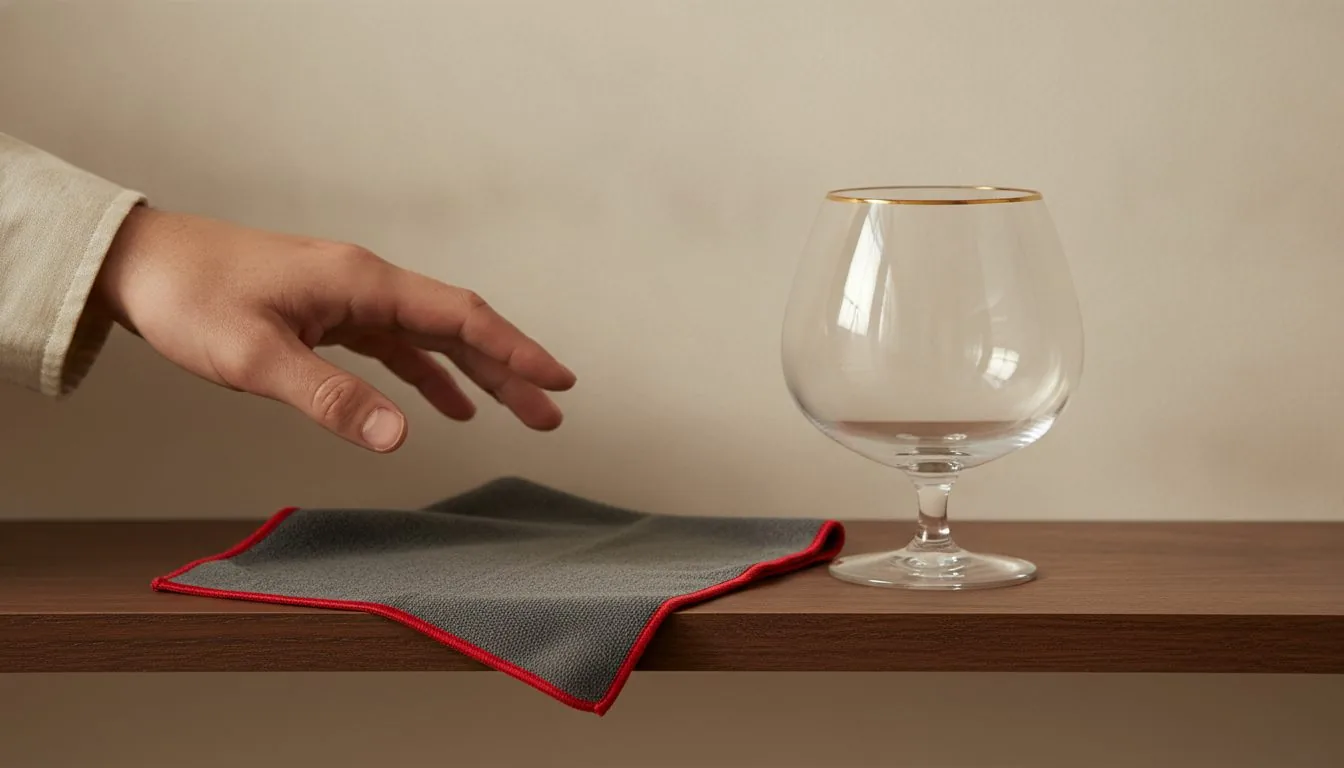
Quick Answer: A snifter is a short-stemmed glass with a wide bottom and a narrow top, used mostly for aged brown spirits such as brandy and whisky. The tulip is the other common cognac glass, with a longer stem. Tasting Table says experts favor the tulip because hand-warming a snifter mutes flavor, but calls the choice a matter of preference. A snifter is made to be cupped in the hand.
If you own or were given a big round brandy glass, this is what it is, how it differs from a tulip, and how to look after it. It does not recommend a spirit, a pour or a bottle. Other spirits glasses are in types of whiskey glasses, and a snifter's wide bowl and narrow top make washing it a small puzzle, covered below.
What is a snifter?
Wikipedia (checked October 2026) calls a snifter a type of stemware: a short-stemmed glass whose bowl has a wide bottom and a relatively narrow top. It lists the other names as brandy balloon, brandy snifter, brandy glass, brandy bowl and cognac glass. It says the large surface area helps the liquid evaporate, the narrow top traps aroma, and the rounded bottom lets you cup the glass in your hand, warming the liquor. It adds that snifters are almost always filled to only a small part of their capacity.
Wikipedia's stemware article calls the snifter an exception to the stem rule. A stem normally keeps the hand from affecting temperature, while the snifter is designed to be held in the cup of the hand.
What is the difference between a snifter and a tulip?
Tasting Table (December 2023) names snifters and tulips as the two main styles of glass for cognac. It describes snifters as bulbous with a short stem and a wide middle, and tulips as having a longer stem, with a body that narrows in the middle before flaring out.
| Feature | Snifter | Tulip |
|---|---|---|
| Stem | Short | Longer |
| Body | Bulbous, wide middle | Narrows in the middle, then flares |
| How it is held | Stem between the fingers, bowl in the palm | By the stem |
| Aroma, per Tasting Table's experts | Traps aroma inside the glass | Gives a wider range of smells |
Why do experts disagree about warming the glass?
Because the snifter is designed to warm the liquor in your hand, and some experts think that is a flaw. Tasting Table says the warmth is by design but that experts say it mutes the flavors, and that the tulip's shape gives a wider range of aromas where a snifter keeps them inside. It also says snifters have been used much longer, and that plenty of cognac lovers still use them with no real difference in enjoyment.
Others have a different view. Difford's Guide, a drinks publisher, lists the snifter, or brandy balloon, for cocktails and aged spirits such as cognac, and says cocktails served in snifters are often lightly warmed. Neither source offers a test you can repeat at home. It is a preference.
Is a snifter only for brandy?
No. Wikipedia says snifters are mostly used for aged brown liquors such as bourbon, brandy and whisky. It also says they suit some beers with complex aromas and a higher alcohol content, such as imperial stout, Baltic porter, barley wine and double India pale ale, and it describes a variant called a pipe snifter used for port and brandy. Capacity differs by source: Wikipedia says most snifters hold 180 to 240 ml (6 to 8 US fluid ounces), while Difford's lists the snifter at 12 ounces to the brim. Neither says how full to pour, and this post does not.
How do you wash and dry a snifter?
By hand, holding the bowl, and never twisting it against the stem. Waterford says to wash glass and crystal in warm soapy water, rinse thoroughly, dry with a lint-free cloth, and not turn a glass upside down to dry or store it, since the rim is the most fragile part. Val Saint Lambert asks for lukewarm soapy water and a soft sponge, with no rough or metal scrubbers.
The hard part is the shape. The bottom of a snifter is wide and the top is narrow, so a hand may not reach in. A soft brush is one option; wine glass cleaning brush: do you really need one? covers when it helps and when it adds risk to a stem. If your snifter is crystal, the safety question is in is lead crystal safe? and cloudiness is in how to clean cloudy crystal glasses.
The Excalibur Brothers Premium Glass Polishing Cloth is our own product, sold on this site. The Premium Glass Polishing Cloth in gray is a large microfiber cloth, sold as a pack of two and listed at 23.5 x 20 inches per cloth. It is for polishing the outside and stem after the glass is washed and dry. The finishing steps are in how to polish wine glasses.
When this is not the right choice: a cloth does not decide which glass suits a spirit, and it cannot reach the inside of a narrow-topped bowl. If a snifter has a chip, stop using it, whatever you plan to polish it with.
Frequently asked questions
What is a snifter glass used for?
Mostly aged brown liquors such as brandy, bourbon and whisky, according to Wikipedia. Some beers with complex aromas are also served in them.
What is a cognac glass?
Tasting Table names two: the snifter and the tulip. Both are used for cognac.
Is a snifter the same as a brandy glass?
Yes. Brandy glass, brandy balloon and brandy snifter are all names for it, per Wikipedia.
Should you hold a snifter by the stem?
Wikipedia says it is designed to be cupped in the hand, which warms the liquor. Tasting Table says experts think the warming mutes flavor. Both agree that is how the glass is built to be held.
Can you put a snifter in the dishwasher?
It depends on the maker. Waterford warns dishwasher heat, friction and detergent can dull or scratch glass, and Val Saint Lambert does not advise it for crystal.
How do you clean a snifter with a narrow top?
With a soft sponge or cloth and lukewarm soapy water, reaching in gently, or a soft brush, though no maker cited here asks for one. Avoid rough or metal scrubbers.