Wine Glass Cleaning Brush: Do You Really Need One?
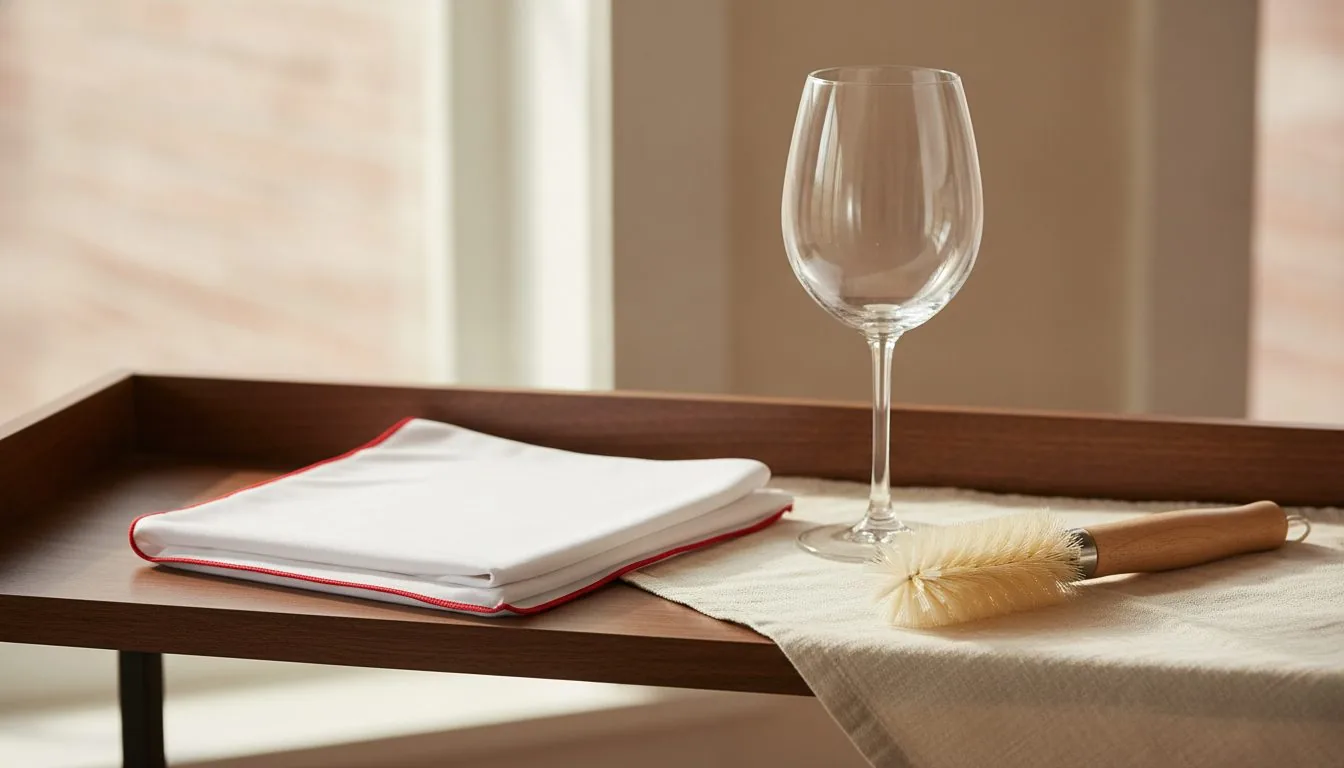
Quick Answer: Usually not. None of the glassmaker pages cited here calls for a brush. They ask for a soft sponge or cloth, warn against rough or metal scrubbers, and warn against twisting the bowl against the stem. A brush is optional for reaching into a narrow bowl. A cloth is enough to dry and polish. For very delicate stems, follow your own maker's instructions.
A brush solves one problem, reaching the bottom of a deep bowl, and it adds one risk, pressure on the stem. This post sets out what makers name, how to decide between a sponge, a brush and a cloth, and where a cloth is enough. The full routine is in how to clean wine glasses, and the cleaners themselves are in wine glass cleaner: what works and what to skip.
Do you need a brush to clean wine glasses?
No cited maker says you do. This is what each one names.
| Source | Tool it names |
|---|---|
| Val Saint Lambert | A soft sponge. Avoid anything rough, and avoid metallic sponges or buffers |
| Rückl | A soft sponge or cloth, to prevent mechanical damage |
| Libbey (everyday glassware) | A nylon net or plastic scrubber, gently, on vinegar-soaked glasses with a mineral film |
| Waterford | No tool named. Wash by hand in warm soapy water and rinse thoroughly |
None of these pages names a stemware brush, and none rules one out. A brush is a judgment call, so the question is what it could do to the glass.
Is a sponge, a brush or a cloth safest for a stem?
The tool matters less than how the glass is held. Waterford says not to twist the bowl in the opposite direction to the stem when washing or drying, because that can cause damage. The same logic applies when scrubbing. Waterford and Rückl both say the rim is the most fragile part. A soft sponge, used with the bowl supported in your hand, meets both warnings. If you choose a brush, pick one with soft bristles and no exposed metal, and check it for anything hard. That last point is common sense, not a maker rule.
How do you reach the bottom of a wine glass bowl?
Rinse soon after use so there is little to reach. If your hand fits, a soft sponge does the job. If it does not, swirl warm water with a small amount of mild detergent and rinse well. For a stubborn mineral film, Val Saint Lambert says to fill the glass with white vinegar, neat or diluted with a little water. The test for film versus etching is in how to clean cloudy drinking glasses.
What about delicate, thin-stemmed glasses?
Follow the maker's own instructions. None of the maker pages cited here covers a specific thin-stemmed range, so this post gives no brand-specific steps. The general rule from Waterford still applies: support the bowl and do not twist it against the stem. Stop using any glass that is chipped or cracked.
Where does a cloth fit, and when is it enough?
A cloth dries and polishes the outside and inside of a clean glass. It does not scrub. The Excalibur Brothers Premium Glass Polishing Cloth is our own product, sold on this site. The Premium Glass Polishing Cloth in white is a large microfiber cloth, sold as a pack of two, and the collection also has gray and an assorted pair.
When this is not the right choice: a cloth will not clean the inside of a bowl and it will not remove film or etching. If your glasses come out of the sponge wash clean, you may need nothing more than a clean, lint-free towel.
Frequently asked questions
What is the best wine glass cleaning sponge?
The one the makers describe: soft, with no rough or metallic surface. Val Saint Lambert says to avoid rough or metallic sponges and buffers, and Rückl says a soft sponge or cloth. No maker cited recommends a brand.
Can you use steel wool or an abrasive pad on wine glasses?
No cited maker says so. Val Saint Lambert warns against rough or metallic sponges and buffers.
Can you use a dish brush on wine glasses?
No maker cited names one. If it has hard bristles or an exposed metal or plastic handle, keep it away from glass and use a soft sponge instead.
Is a nylon scrubber safe on wine glasses?
Libbey suggests a nylon net or plastic scrubber, gently, on everyday glasses with a mineral film after a vinegar soak. The crystal makers cited here ask for a soft sponge or cloth, so use the softer tool on stemware.
Can you clean wine glasses without a brush?
Yes. A soft sponge, warm soapy water, and a vinegar soak for mineral film are what the makers describe.
How do you wash thin-stemmed wine glasses without breaking them?
Support the bowl with one hand and never twist it against the stem, as Waterford says. Keep glasses apart in the sink, as Rückl says, and wash one at a time.