How to Remove Water Spots From Wine Glasses
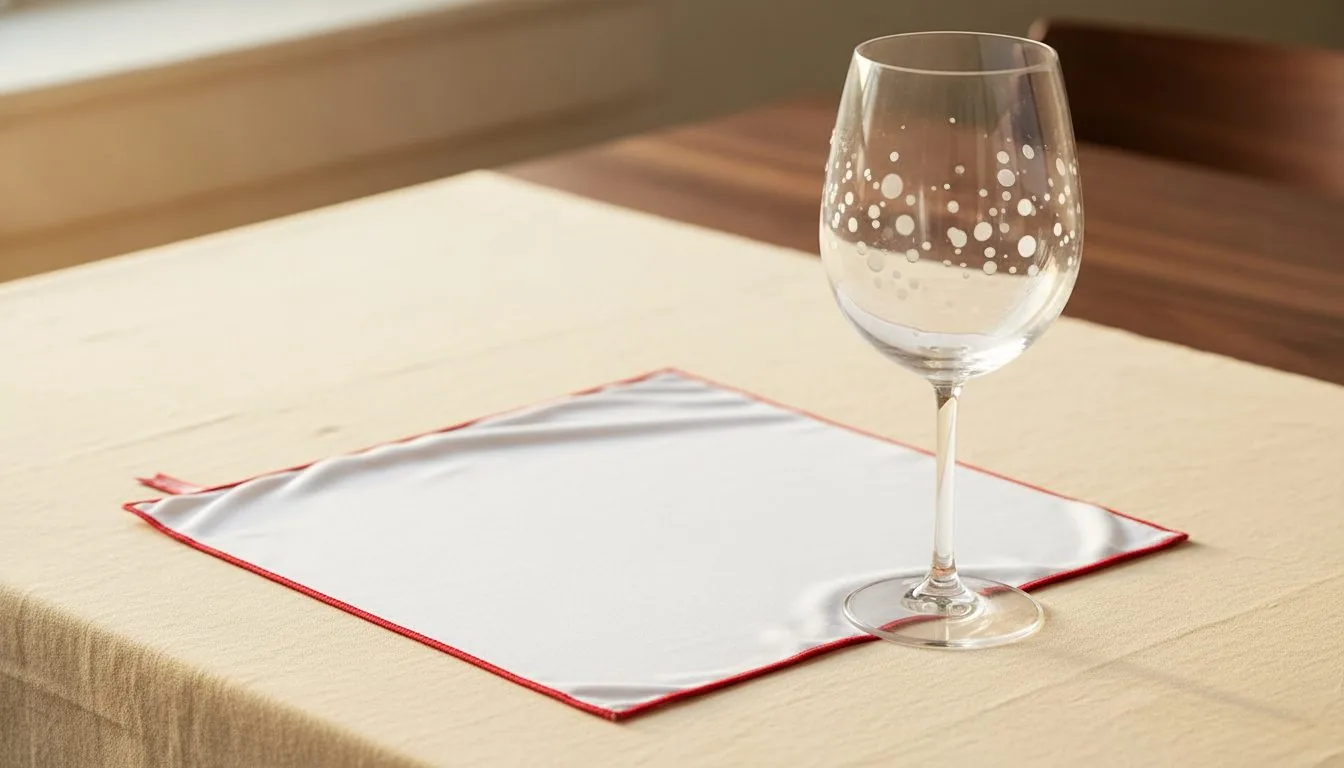
Quick Answer: Water spots on wine glasses are mineral deposits left when hard water dries. White vinegar dissolves them, then rinse and dry at once. If the marks stay after vinegar, the glass may be etched, which is permanent. To prevent spots, rinse away all detergent, use a rinse aid in the dishwasher, and dry the glass by hand soon after washing.
Spots and rings that appear as a glass dries are usually minerals, which means they can be removed and, better, prevented. This post covers the cause, the removal method, the marks that will not come off, and prevention. The full wash routine is in how to clean wine glasses, and general care is in Caring for Fine Glassware.
What causes water spots on wine glasses?
Hard water. The US Geological Survey defines hardness as dissolved calcium and magnesium, and says hard water is one of the most common causes of cloudy dishes and glassware, including spots and film after a dishwasher load. Libbey explains the mechanism: hard water that dries on glassware leaves minerals such as calcium and magnesium behind. Detergent residue can leave a similar mark, and Whirlpool says the wrong amount or type of detergent can leave a film.
How do you remove water spots from wine glasses?
With white vinegar, then a rinse. Crystal maker Val Saint Lambert says to fill the glass with white vinegar, neat or diluted with a little water. Libbey, for everyday glassware, says to soak in vinegar, gently scrub with a nylon net or plastic scrubber, rinse, and dry with a lint-free towel. No cited page gives a ratio or a soak time. Hold the bowl and do not twist it against the base. No maker cited names lemon juice or citric acid, so this post does not cover them.
Which marks are spots, and which are permanent?
| What you see | Likely cause | Fix |
|---|---|---|
| White spots or rings after drying | Hard-water minerals | Vinegar, rinse, dry promptly |
| Cloudy layer across the glass | Hard-water film or detergent residue | The same, and rinse more thoroughly next time |
| Marks that stay after vinegar | Etching, or possibly a silica film (Whirlpool) | None. Libbey says no practical method restores etched glass |
The vinegar rub test is explained in how to clean cloudy drinking glasses, and permanent damage is covered in dishwasher etching on glasses.
How do you prevent water spots?
Dry the glass before the water dries on it. Libbey says to consider hand-drying right after a dishwasher cycle, and Rückl says to wipe crystal gently dry so water does not settle. Rinse away all detergent, as Waterford says to rinse thoroughly. The Corning Museum of Glass conservators suggest a final rinse with distilled or deionized water, which has no minerals and leaves no spots. In a dishwasher, Whirlpool and Libbey name a rinse aid, and Val Saint Lambert says to open the door when the cycle ends so steam does not settle on the glass. A dishwasher loaded per wine glasses in the dishwasher also helps.
This is the cloth's job. It takes the water off before it evaporates. The Excalibur Brothers Premium Glass Polishing Cloth is our own product, sold on this site. The Premium Glass Polishing Cloth in white is a large microfiber cloth sold as a pack of two, and the collection also has gray and an assorted pair. The polishing method is in how to polish wine glasses.
When this is not the right choice: a cloth prevents new spots. It does not dissolve deposits that are already on the glass, and it cannot fix etching. If you already dry glasses promptly with a clean, lint-free towel, you do not need one.
How hard is your water?
Ask your water utility. The USGS classes water at 0 to 60 mg/L as soft, 61 to 120 as moderately hard, 121 to 180 as hard, and over 180 as very hard, measured as calcium carbonate. Its national data is not designed for decisions at the scale of a single home.
Frequently asked questions
How do you remove water stains from wine glasses?
Rub with white vinegar, rinse thoroughly, and dry at once. If the stain stays, it may be etching.
How do you clean wine glasses with water spots?
Wash as usual, rinse well, then treat the spots with white vinegar. Dry by hand so the water does not dry on the glass again.
How do you remove calcium deposits from drinking glasses?
Calcium deposits are limescale. Val Saint Lambert names white vinegar, and Libbey says to soak in vinegar and scrub gently with a nylon net or plastic scrubber.
How do you get rid of white marks on wine glasses?
Try vinegar first. White marks that wipe off were mineral film. White marks that stay may be etching, which Libbey says is permanent, or surface deterioration, which Corning Museum of Glass conservators say cannot be fixed.
Why do my wine glasses get spots after the dishwasher?
Hard-water minerals or detergent residue, per Whirlpool and the USGS. A rinse aid, the right amount of detergent and prompt drying help.
Will a water softener stop the spots?
Not necessarily. Libbey says natural soft water or softened hard water is most often to blame for etching, so a lower setting is not automatically better. Check your dishwasher's manual before changing its softener setting.