How to Clean Champagne Flutes: Washing, Drying, Bubbles
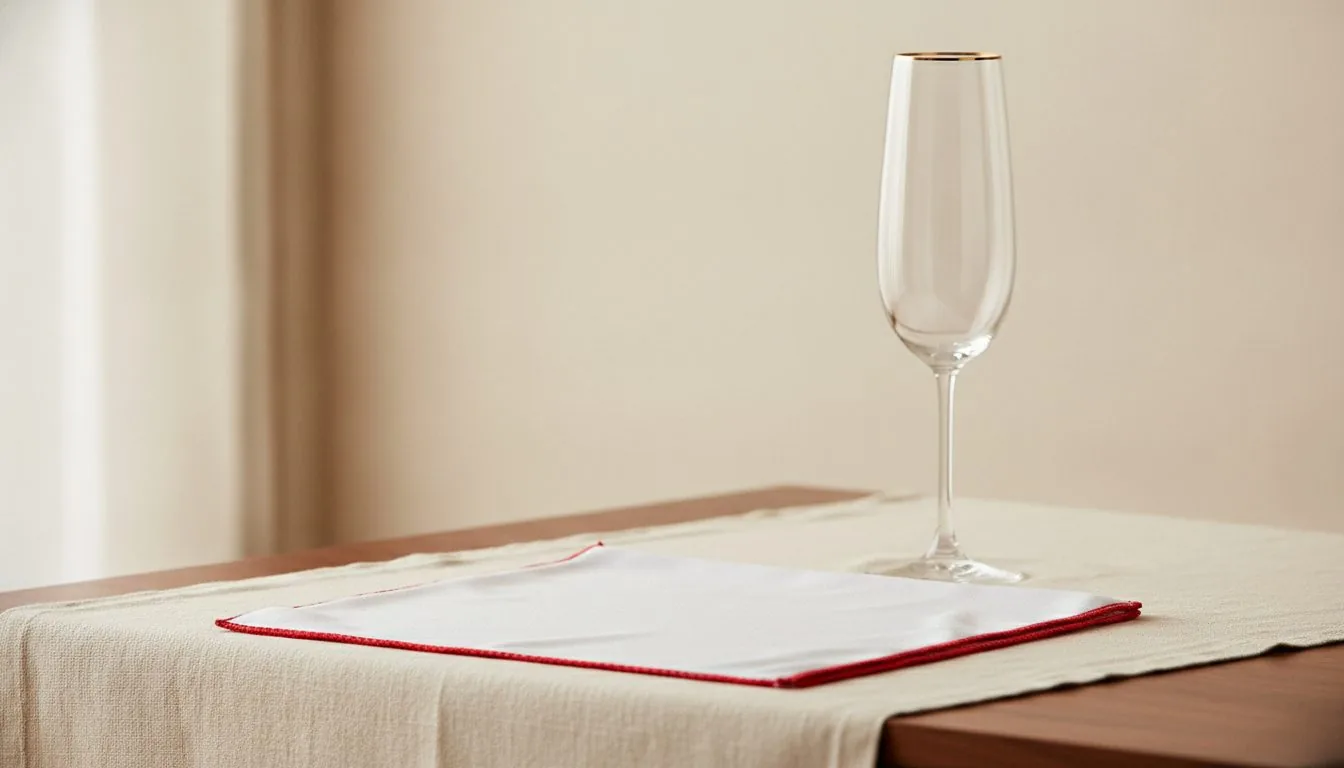
Quick Answer: Wash champagne flutes by hand in lukewarm soapy water with a soft sponge or cloth, support the bowl, never twist it against the stem, and rinse well. Makers ask for a lint-free or soft cloth to dry. One catch: physicist Gérard Liger-Belair's research says bubbles start on tiny cellulose fibers, including fibers from a drying towel, so a fiber-free flute may fizz less.
Flutes are tall and narrow, so the routine from how to clean wine glasses needs a few changes. This post covers washing a narrow bowl without breaking it, whether to towel-dry or air-dry, and a fact that makes flutes different from every other glass: the way you dry one can change how it bubbles. Storage is covered in store wine glasses upside down or upright.
How do you wash champagne flutes by hand?
Use lukewarm soapy water and a soft sponge or cloth, one flute at a time. Val Saint Lambert says to wash crystal by hand in lukewarm soapy water with a soft sponge, and to avoid rough or metallic sponges and buffers. Rückl says lukewarm water with a soft sponge or cloth, and that vinegar can go in the soapy water to lift stains and dried dirt. Waterford adds that you should not twist the bowl in the opposite direction to the stem, because that can cause damage.
Hold the flute by the bowl and rinse until no soap is left. A narrow bowl can be hard to reach into. Whether a brush helps is covered in wine glass cleaning brush: do you really need one?, and no cited maker names one. Stop using any flute with a chipped rim or a crack.
Can champagne flutes go in the dishwasher?
Makers split. Waterford says dishwasher heat, friction and detergent can dull or scratch the surface, and Val Saint Lambert would not advise it. Rückl allows it if you give each glass enough space. The wider question is in how to put wine glasses in the dishwasher safely.
Should you towel-dry or air-dry champagne flutes?
It depends on what you want. The care pages ask for a clean, lint-free cloth. The champagne research points the other way.
| Source | What it says about drying |
|---|---|
| Waterford | Dry with a lint-free cloth. Do not turn the glass upside down while drying or storing |
| Val Saint Lambert | Dry carefully with a soft, non-fluffy cloth |
| Rückl | Wipe gently with a clean cloth so water does not settle |
| Corning Museum of Glass, conservator | After a rinse in distilled or deionized water, air drying or towel drying are both fine, because there are no minerals to leave spots |
| NBC News, reporting Liger-Belair | To get more bubbles, dry with a towel rather than air-drying, because cellulose fibers left in the glass contribute to bubble production |
Hard water is the reason not to simply let a flute drip dry. The US Geological Survey says hard water is one of the most common causes of cloudy dishes and glassware, and spots or film are hard-water residue. For what to do about a film that has already formed, see how to clean cloudy drinking glasses.
Do fibers from a towel make champagne bubbles?
According to the research, yes, in part. Difford's Guide reports that bubbles form on microscopic particles, technically cellulose fibers, which can include fibers from a tea towel used to dry the glass, along with skin or hair molecules from the air and other dirt. It adds that bubbles can also form in tiny imperfections on the glass itself.
NBC News (31 December 2012) reports the same line of research by Liger-Belair, a physicist at the University of Reims, and draws the practical point: wash the glasses before the party and dry them with a towel rather than letting them air-dry, since the cellulose fibers left behind contribute to bubble production.
The limits matter. Neither article tested cloths or counted bubbles per fiber, and neither mentions microfiber. By that logic, a flute dried with a lint-free cloth has fewer fibers in it and may fizz differently, but that is an inference, not something either article tested. Wash the flute first either way, and pick the finish you prefer.
How do you polish the outside and stem of a flute?
Hold the bowl, polish the stem and outside with a second cloth, and never twist the bowl against the stem. The steps are in how to polish wine glasses.
The Excalibur Brothers Premium Glass Polishing Cloth is our own product, sold on this site. The Premium Glass Polishing Cloth in white is a large microfiber cloth, sold as a pack of two, listed at 23.5 x 20 inches per cloth. The listing describes it as lint-free. The collection also has gray and an assorted pair.
When this is not the right choice: the cloth is too large to push to the bottom of a narrow flute, so it cannot dry the inside. A lint-free cloth also leaves fewer fibers behind, which is the opposite of what the bubble research favors. If maximum fizz matters more to you than a spotless finish, a clean towel or air drying after a distilled-water rinse suits you better.
Frequently asked questions
How do you clean champagne flutes at home?
Wash each one by hand in lukewarm soapy water with a soft sponge or cloth, holding the bowl. Rinse until no soap is left, then dry with a clean cloth. Do not twist the bowl against the stem.
How do you clean champagne glasses without leaving spots?
Spots are usually hard-water residue, per the US Geological Survey. Dry the glass promptly, or finish with a distilled-water rinse, which the Corning Museum of Glass says leaves no mineral spots.
Can you use vinegar to clean champagne flutes?
Rückl says vinegar can go in the soapy water to remove stains and dried dirt, and Val Saint Lambert says white vinegar, neat or diluted with a little water, removes limescale. No cited maker gives a ratio or a time.
Should you air-dry champagne flutes?
Air drying is fine after a distilled or deionized water rinse, according to the Corning Museum of Glass. After tap water in a hard-water area it can leave spots. Waterford says not to stand a glass upside down on its rim while drying.
Does a towel change how champagne bubbles?
Possibly. Difford's Guide and NBC News both report Liger-Belair's finding that bubbles form on cellulose fibers, which can come from a drying towel. Neither tested particular cloths.
Are crystal champagne flutes washed differently?
The same way, by hand. Only the maker can say whether a piece contains lead. The US EPA says to avoid storing or serving food and liquids in lead crystal, and more so if it is chipped or cracked.